Inkle Looms

Discover Their Uses, Types, and Who Uses Them

Welcome to our Inkle Looms Category page! If you’re a crafting enthusiast, beginner weaver, or seasoned artisan, inkle looms are a fantastic tool to explore. These versatile, portable looms are perfect for creating narrow, durable woven bands for functional and decorative projects. Let’s dive into what inkle looms are used for, the different types available, and who loves using them. Whether you’re shopping for your first loom or looking for inspiration, you’re in the right place!

Everything You Need to Know About Inkle Looms

If you've never tried band weaving before, an inkle loom is one of the most enjoyable ways to discover it. Small, approachable, and capable of producing work that ranges from simple beginner bands to intricately patterned historical textiles, inkle looms occupy a unique space in the weaving world. They're the kind of tool that looks modest on the shelf and then completely surprises you with how much creative territory they open up. 

At Paradise Fibers, we've been helping weavers at every level find the right equipment since 1997, and we carry a thoughtful selection of inkle looms from the brands we trust most.

What an Inkle Loom Actually Does

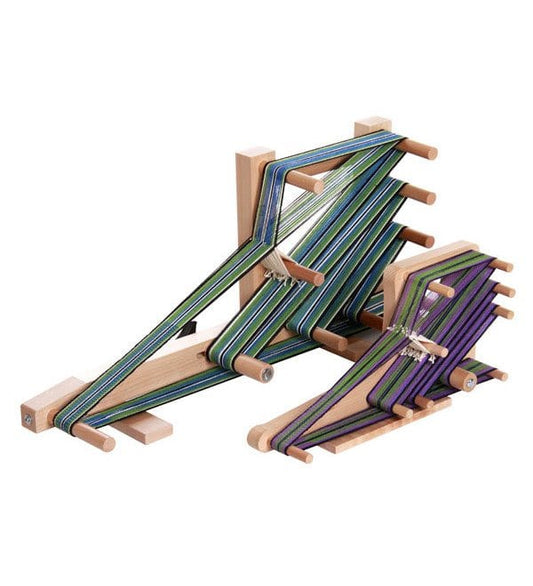
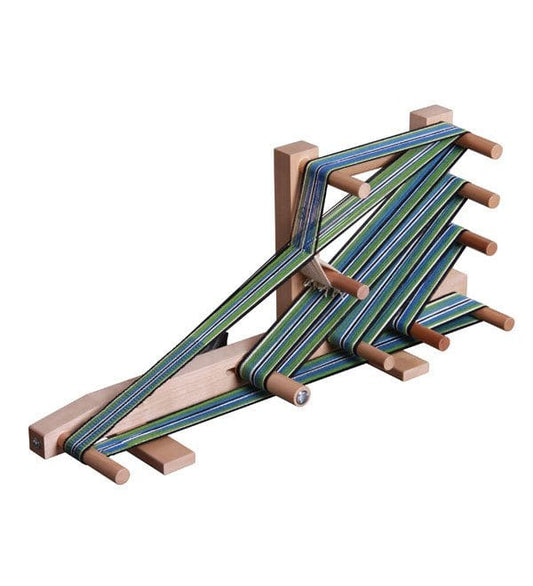
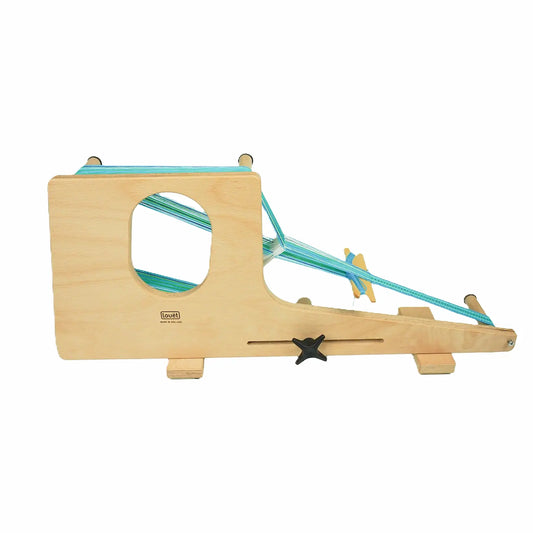
An inkle loom is a specialized weaving tool designed to produce warp-faced bands, which are narrow, strong woven strips where the lengthwise warp threads dominate the surface and create the pattern. Unlike a floor loom or a rigid heddle loom, an inkle loom works on a much more compact scale, producing bands that can range from a fraction of an inch to a few inches wide and from just a few inches to several feet in length depending on the loom's peg configuration. The warp threads are strung around a series of pegs in an elongated loop, and a heddle created from string loops allows you to alternate between two sheds as you weave, passing a shuttle back and forth to build the band row by row.

The result is a dense, strong, beautifully patterned band that can serve an enormous range of functional and decorative purposes. The process is rhythmic and meditative once you find your flow, and the relatively quick progress of band weaving makes it deeply satisfying for crafters who are used to the longer timelines of larger weaving projects.

What You Can Make with Inkle Looms

The range of things an inkle loom can produce is genuinely impressive for such a compact tool. Here are some of the most popular projects our customers tackle:

  • Belts and straps are among the most classic inkle loom projects. Guitar straps, camera straps, bag handles, and belt blanks are all achievable on a standard tabletop inkle loom, and the durability of warp-faced weaving makes them genuinely functional as well as beautiful.
  • Trims and edgings give handmade garments and textiles a finished, artisanal quality that's hard to achieve any other way. A handwoven trim added to a sewn or knitted piece elevates the whole project immediately.
  • Accessories and jewelry including bracelets, necklace cords, hatbands, and key fobs are quick projects that make wonderful gifts and popular craft fair items.
  • Bookmarks are a favorite beginner project because they're short enough to complete quickly while still giving you a finished object worth keeping or gifting.
  • Historical and reenactment textiles including garment ties, drawstrings, and period trim are a beloved use of inkle weaving among costume makers and historical reenactors. The techniques used on an inkle loom connect directly to weaving traditions from medieval Europe and colonial America.
  • Household items like hanging tabs for towels, aprons, and curtains add a handcrafted touch to everyday objects that's both practical and personal.

Choosing the Right Inkle Loom for Your Needs

Not all inkle looms are built the same, and the right choice depends on where you are in your weaving journey and what kinds of projects you want to tackle. Portable options like the Ashford Inkle and Inklette looms are lightweight, compact, and easy to carry to workshops, guild meetings, or fiber festivals. They're an excellent starting point for beginners and a practical choice for anyone who wants to weave on the go. The Ashford Inklette is the smaller of the two and a particularly good entry point if you want to try band weaving before committing to a larger loom.

The Schacht Inkle Loom offers a sturdier tabletop design with adjustable pegs for tension control and the capacity to handle longer, more complex bands. It's well suited to intermediate weavers and anyone who wants to work on belts, longer straps, and more elaborate pattern work. The build quality on Schacht equipment is consistently excellent, and their inkle loom is built to last for decades of regular use.

For weavers who want to complement their inkle loom with the right accessories, we carry shuttles, heddle string, and additional weaving tools to complete your setup. The Ashford Belt Shuttle is a popular pairing with their inkle looms, and Schacht Texsolv Heddles are a reliable choice for replacing or supplementing the string heddles that come standard on most looms.

Frequently Asked Questions About Inkle Looms

Is an inkle loom good for beginners?

Inkle looms are one of the most beginner-friendly weaving tools available. The warping process is straightforward once you've done it once or twice, the shed is created manually without complex mechanics, and the scale of the projects means you see results quickly. Most beginners produce a functional, good-looking band on their very first attempt, which makes the learning curve feel genuinely rewarding rather than discouraging. If you've been curious about weaving but feel intimidated by floor looms or rigid heddle looms, an inkle loom is an excellent and low-stakes way to begin.

What kind of yarn works best on an inkle loom?

The best yarns for inkle loom weaving are smooth, strong, and tightly plied. Cotton, linen, wool, and silk are all popular choices, with cotton being the most common for beginners because it's easy to work with, widely available, and produces crisp, defined patterns. Avoid fuzzy or loosely spun yarns since they can make it difficult to open a clean shed. Fingering and sport weight yarns work well for most band projects, though the specific weight you choose should be matched to the project scale and the sett you're working at.

How long of a band can I weave on an inkle loom?

The maximum band length depends on the specific loom model. A portable loom like the Ashford Inklette produces shorter bands suitable for bookmarks and bracelets, typically up to around a yard or so in finished length. The Ashford Inkle and Schacht Inkle Loom can produce considerably longer bands, with some configurations allowing for several feet of finished weaving. The peg layout and the number of times you wrap the warp around the loom determine the total warp length, and the finished band will be shorter than the warp by the amount taken up in weaving.

Can I use an inkle loom for pattern weaving?

Absolutely, and pattern weaving is one of the most exciting things you can do on an inkle loom. By alternating the colors of your warp threads and manipulating which threads are raised in each shed, you can create geometric patterns, letters, and complex designs entirely within the warp-faced structure of the band. Pickup stick techniques allow for additional pattern complexity beyond the basic two-shed structure. There is a rich tradition of pattern work in inkle weaving drawn from historical European and colonial American textile traditions, and the modern inkle weaving community continues to push the boundaries of what's possible on such a compact loom.

What is the difference between the Ashford Inkle and the Ashford Inklette?

The Ashford Inklette is the smaller and more portable of the two, designed for shorter bands and maximum packability. It's a great choice for beginners who want to learn the basics and for experienced weavers who want a truly travel-friendly option. The Ashford Inkle is a larger loom capable of producing longer bands and handling a wider range of project types. Both are well-made, affordable, and backed by Ashford's reputation for quality fiber arts equipment.

Frequently Asked Questions

An inkle loom is a compact, peg-based loom designed specifically for weaving narrow bands, straps, and braids. It produces long continuous lengths of woven band that can be used as belts, bag straps, guitar straps, bookmarks, trim for garments and home goods, hair ties, hatbands, and an enormous variety of decorative and functional woven pieces. Despite its small size, an inkle loom is capable of producing complex geometric patterns and colorwork through a straightforward string heddle system. The loom is beloved in the fiber arts community for being inexpensive, portable, and genuinely addictive to use once you get started. It is one of those tools that looks deceptively simple and then opens up into a world of creative possibilities.

An inkle loom and a rigid heddle loom are both entry level weaving tools, but they produce fundamentally different things. A rigid heddle loom produces wide flat cloth - scarves, towels, fabric yardage - by weaving weft threads across a full warp. An inkle loom produces narrow woven bands up to a few inches wide, with a much simpler setup and a faster learning curve. The two crafts are complementary rather than interchangeable. If your main interest is making cloth for garments, household items, or wide projects, start with a rigid heddle loom. If you are drawn to making straps, bands, decorative trim, and small woven pieces with strong geometric color patterns, an inkle loom is the right first tool. Many weavers eventually own and love both.

The inkle loom is one of the most genuinely beginner-friendly weaving tools available. The warping process is simpler than most looms, the string heddle system is easy to understand and set up, and because the work is narrow you can see the entire piece clearly while you work. Most first-time inkle weavers produce a complete woven band in their first session, which is enormously satisfying and helps build confidence quickly. The loom is also compact enough to use at a table or even in a chair without a dedicated weaving space. If you are curious about weaving but feel intimidated by the complexity of larger looms, an inkle loom is an excellent low-barrier entry point into the craft.

Inkle weaving puts the warp threads under significant tension for an extended period, so you want a smooth, strong, relatively low-stretch yarn that will hold up cleanly throughout the project. Cotton yarn in fingering or sport weight is one of the most popular choices because it is strong, smooth, and available in a huge range of colors that are ideal for the geometric colorwork inkle weaving is known for. Linen is another excellent option. Tightly plied wool can also work well, though yarns with a lot of stretch are harder to manage at consistent tension. Very soft, fragile, or loosely spun yarns are not well suited to inkle warp. Weaving cotton on cones is an efficient and economical way to stock a wide color palette for inkle projects.

The basic mechanics of inkle weaving can be learned in a single afternoon - warping, creating the string heddle, and producing a simple over-under plain weave band is accessible to most people on their first try. From there, inkle weaving has a deep well of complexity to explore. By varying which warp threads are raised for each pick, you can create intricate pick-up patterns - traditional geometric designs, lettering, pictorial motifs, and historical patterns from weaving traditions around the world. Some inkle weavers spend years exploring the full range of what the loom can produce. The entry is genuinely low and the ceiling is genuinely high, which makes it a rewarding long-term craft commitment as well as a great beginner tool.

Inkle looms do vary in size, primarily in terms of the length of band they can produce in a single warp and the maximum width of the weaving. Larger looms accommodate longer warps, which means you can weave longer pieces without having to cut and restart - useful if you are making a long belt or strap. The weaving width on an inkle loom is relatively narrow regardless of loom size, typically between one and four inches, since the format is specifically designed for band weaving. A standard size inkle loom is sufficient for the vast majority of projects most weavers undertake. If you are interested in producing very long continuous straps or bands in a single piece, a larger loom is worth the investment. Our team can help you match the right size to your specific project goals.